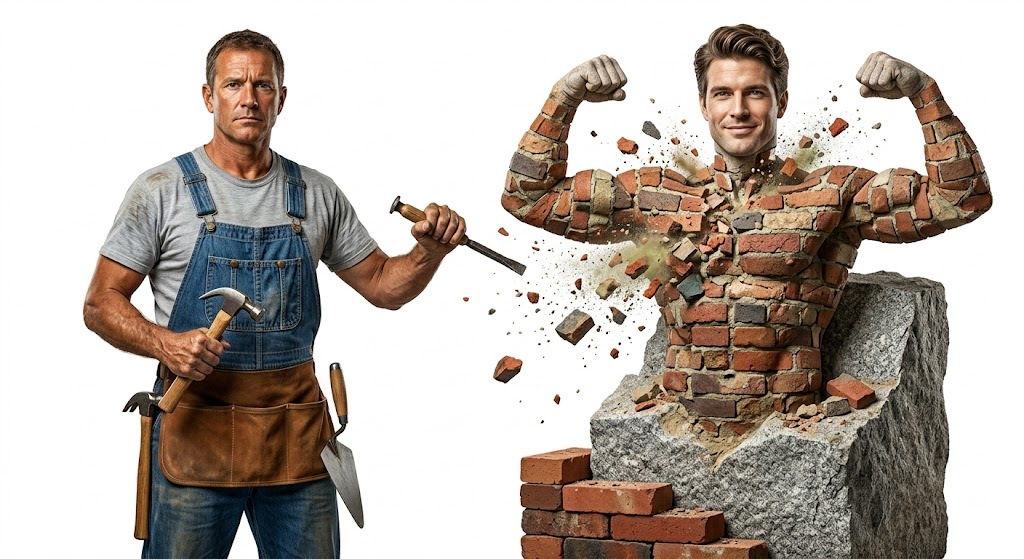
If there is one habit that has damaged more confidence, happiness, and peace of mind than almost anything else, I believe it is comparison.
Not failure.
Not rejection.
Not criticism.
Comparison.
I know this because I have done it myself more times than I care to admit.
I’ve compared my success to other people’s success. My appearance to other people’s appearance. My progress to other people’s progress. My life to other people’s lives.
And every single time, the result was the same.
I ended up feeling worse about myself.
What took me years to understand is that comparison creates a game that nobody can truly win.
No matter how successful you become, there will always be someone who appears more successful.
No matter how fit you become, there will always be someone in better shape.
No matter how much money you earn, there will always be someone wealthier.
If your self-worth depends on being better than everyone else, you are building it on a foundation that can never be stable.
The Comparison Trap Starts Early
I think many of us learn to compare ourselves long before we realize what we are doing.
At school, we compare grades.
In sports, we compare performance.
At work, we compare salaries and achievements.
In relationships, we compare lifestyles and experiences.
Eventually comparison becomes automatic.
We stop asking:
“Am I growing?”
and start asking:
“Am I ahead of everyone else?”
That shift is incredibly damaging because growth and comparison are not the same thing.
Growth is personal.
Comparison is competitive.
One helps build confidence.
The other often destroys it.
Social Media Turned Comparison Into a Lifestyle
In my opinion, social media has made comparison worse than at any point in history.
For most of human existence, people compared themselves to a relatively small number of individuals.
Today, we compare ourselves to thousands of people every day.
We see:
- luxury vacations
- perfect physiques
- expensive homes
- successful businesses
- happy relationships
- exciting lifestyles
And we see them constantly.
The problem is that we rarely see the full picture.
We see highlights.
We see carefully selected moments.
We see what people want us to see.
What we don’t see are:
- financial stress
- insecurity
- loneliness
- anxiety
- failed relationships
- self-doubt
We compare our reality to someone else’s presentation.
That comparison is unfair from the start.
Comparison Creates Permanent Dissatisfaction
One of the biggest problems with comparison is that it prevents appreciation.
Instead of recognizing progress, we focus on what we lack.
Instead of celebrating growth, we focus on the next person ahead of us.
I think many men are living lives they would have been proud of ten years ago, yet they feel disappointed because they are measuring themselves against unrealistic standards.
That is tragic.
Imagine achieving goals you once dreamed about but being unable to enjoy them because someone else appears to have more.
Comparison steals satisfaction from accomplishments that should feel meaningful.
It moves the finish line every time you get closer.
Self-Worth Should Not Be a Competition
One belief I have become increasingly convinced of is that self-worth should never be based on ranking.
Your value as a person is not determined by where you sit on a social hierarchy.
You do not become more worthy because you earn more money.
You do not become more worthy because you attract more attention.
You do not become more worthy because you have more followers, more status, or more possessions.
Those things may influence how society perceives you, but they should not determine how you perceive yourself.
There is a huge difference.
The moment self-worth becomes dependent on outperforming others, it becomes fragile.
Because there will always be someone who appears to be winning.
The Hidden Damage to Confidence
Many people think comparison motivates them.
Sometimes it does.
But I believe its long-term effects are often destructive.
Comparison trains you to focus on your deficiencies.
You become obsessed with what is missing rather than what is improving.
You overlook your strengths because you are fixated on someone else’s strengths.
Over time, confidence begins to erode.
You stop seeing your own progress.
You stop recognizing your own achievements.
You stop appreciating your own journey.
Instead, you become trapped in a cycle of measuring, judging, and feeling inadequate.
That is not confidence.
That is self-criticism disguised as ambition.
Everyone Is Fighting a Different Battle
One reason comparison makes so little sense is that no two people are living the same life.
People start from different circumstances.
They have different opportunities.
Different challenges.
Different talents.
Different priorities.
Different definitions of success.
Comparing your life to someone else’s without understanding their full story is like comparing two books after reading only a single page from each.
The comparison is incomplete.
Life is far more complex than appearances suggest.
What I Try to Compare Instead
As I have gotten older, I have tried to replace comparison with reflection.
Instead of asking:
“Am I better than someone else?”
I try to ask:
“Am I improving?”
That question changes everything.
Because improvement is something you can control.
You can become:
- wiser
- healthier
- stronger
- more disciplined
- more self-aware
without needing to compete with anyone.
Progress becomes personal rather than performative.
The focus shifts from proving yourself to developing yourself.
My Honest Opinion
My honest opinion is that comparison has become one of the most destructive habits of modern life.
It convinces people they are falling behind when they may actually be doing quite well.
It creates insecurity where gratitude should exist.
It creates frustration where progress should be recognized.
Most importantly, it disconnects people from their own journey.
The older I get, the less interested I am in competing with strangers.
I am far more interested in becoming a better version of the person I was yesterday.
That is a comparison that actually serves a purpose.
Because at the end of the day, self-worth should not come from being better than someone else.
It should come from knowing who you are, what you stand for, and recognizing the progress you have made along the way.
In my view, the moment you stop measuring your value against other people is the moment you begin building genuine confidence.
And that is a far more meaningful achievement than winning any comparison game.
Good luck.
Stay strong and keep moving forward.
— RG
Founder, Real Grit for Men
“Strength is built one decision at a time.”